Race Communications

THE INEVITABILITY OF STEP-BY-STEP

Many people look at a race distance as just a lot of numbers, allowing themselves to be intimidated out of even starting by getting overwhelmed by the thought of the big distance at the finish. In fact, many people are put off starting to run at all because they are defeated by the thought of the aspirational distances (half-marathon, marathon, ultramarathon, Comrades) that dominate running in the public mind, so they don’t even get off the couch.

The Inevitability of step by step

The reality is that as intimidating as those big number distances sound, they are also just an accumulation of single steps. Assume an average person’s stride is a half a meter. 10km becomes 20,000 steps, a marathon becomes 84,400 steps, and so on. You might be reading this thinking that this is not helping, and that 84,400 steps is still a LOT, and you’d be right. The best way to illustrate the principle is by way of personal anecdote.

Years ago, I participated in the wonderful Whale of Trail race, a 55km ultra trail run of the famous Whale Trail Hike in the Western Cape’s incredible De Hoop Nature Reserve. I was in pretty good condition, but my day was a disaster from the get-go. At the start I discovered I had an hydration pack failure and couldn’t get water through the pipe into my mouth. With hindsight I can admit that the problem was runner failure and not equipment failure, but nevertheless I spent 11 hours taking off my pack and holding it at a particular angle every time I needed water.

Then, distracted by the hydration situation, I tripped and went over my chronically weak ankle within the first few kilometres. The pain was intense, but I’d been here before. I knew I would just have to let the initial agony subside and then run through the pain for the rest of the run. The problem was that once my ankle went once on any run, it became that much weaker and was more likely to go again. Which it did before 10km was complete.

The Inevitability of step by step

Now the Whale Trail route structure is very cool, with the first half running on great trails through wonderful fynbos covered hills inland towards the sea. The second half is along the coast, taking in dramatic rocky cliffs and glorious beaches (glorious for beachgoers, gruelling for runners), and much more technical. I hit the coast still in OK shape but knowing that my ankle was dangerously weak, with the technical stuff still to come. I took the time to stop and put on my orthotic support brace. This added stability, but it came at the cost of flexibility. I paid the price.

At about 30km, limping along some razor-sharp coastal rocks, I got to a ledge that needed a bit of a climb-down. No problem. I wasn’t jumping anywhere, so, taking a conservative approach, no one in sight ahead of me or behind me, I squatted down to negotiate the drop like an old lady. Boom, my quads cramped violently, I started falling over, stepped out to catch my balance, but my ankle had no give whatsoever, and down I went. It was about a 6-foot drop onto a big and luckily mostly flat rock. I didn’t fall badly (a valuable skill to work on as a trail runner), but I was hurt. I lay on my back, not moving for a while. In my head that was it, my race was over. I remember thinking that taking everything into account, no one will judge me for the DNF (Did Not Finish, in trail runner lingo).

I knew that there was a guy not too far behind me. My plan was to lie there, and when the guy came over the hill and saw me lying there, I was going to ask him to call the Race Organisers and tell them to send the medics, my day was done. I was comfortable to have bailed in my head.

I lay there. “Where’s this guy?” Nothing. Nobody came over the hill. No medics to the rescue (I guess I could have called the Organisers myself but somehow this didn’t fit in with my sense of the dramatic at the time. What can I say?). No guy. After a while I’m starting to feel foolish, just lying there. I start to do a systems check. Fingers, wrists, arms, nothing broken. Ankle throbbing but nothing broken lower down either. Lots of blood from some impressive-looking but superficial knee scrapes, a cut on my calf, and some blood in my eyes (pause for effect) from a (minor) cut on my forehead. I guessed I could stand, so I did. I was sore, but alive. I had to make a decision. I had one last lingering look for the guy coming over the hill, but nothing (I was to discover later that the guy, Hannes, had completely cramped out and had bailed some time before). I took a single tentative step with my good leg. I wobbled a bit but stayed on my feet. I tried the bad ankle. It was very sore but held up, and I knew from experience it would loosen up, as would the rest of my stiff, aching body. I decided to start moving forward. Limping, shuffling, not running by any definition. 2 steps became 10, 10 steps became 100, 100 steps became half a kilometre, half a kilometre became a kilometre. Step by step.

The Inevitability of step by step

At this point I honestly had no thought of successfully finishing the race. I had more than 20km to go. The race cut-off of 11 hours had sounded comfortable at the beginning, but I was now looking at the sun and my watch and thinking that even if I did make the distance, I wouldn’t make the time. I kept moving, forwards, step by step. What other options were there? I decided in my head that as long as I could keep moving forward, I would. I didn’t care if I missed the cut-off, I didn’t care if I got pulled off by medics or the Organisers, but I was not going to put up my hand and say “I give up”. One kilometre became two, two became five. Step by step.

The rest of the race was uneventful. The beach sections were brutal but also a relief because I could shuffle-run a bit without worrying about falling and doing more damage. I passed a few people and a few people passed me. It turned out that I was amongst the back markers who had been cut off some time before but had been short-coursed – transported by vehicle back to a point further down the route. A nice work-around. The company helped.

A huge boost was getting to an aid station and checkpoint, where I was not only allowed to carry on but told, optimistically, that I was on track to finish. Limping, walking, even some running. Step by step.

I remember the cut-off time of 5pm coincided with the winter sunset, and I remember crossing the finish line with 10 minutes to spare and the sun already below the horizon. I think I remember an overwhelming sense of relief rather than any heroic sense of triumph or victory. But I have never forgotten this race. I have since come to conclude that we learn so much more from the bad days, even the disaster days, than the days where everything goes smoothly. I learned that it’s not over until it’s over.

The Inevitability of step by step

And I learned about the Inevitability of Step-By-Step. The end might seem like a million miles away. On another planet, in another universe. But one step becomes five, ten steps become a hundred, a hundred steps become a kilometre. Yes, you might run out of time. Yes, you might be pulled off the course, but for as long as you are putting one foot in front of the other, you are getting closer with every step.

So, get off the couch! Graduate from Parkruns to 10kms, to 21s, to marathons, to ultras. It’s all just an accumulation of steps. Take the first step, the next one will follow.

HOW TO GET INTO TRAIL RUNNING

There are three types of people who are most likely thinking about how to get into trail running. The first is the dedicated road runner looking for something different, the second is the non-runner looking to start running and focusing on or just incorporating some trail, and the third is the ex-runner looking to start up again. The great news is that the advice to all is exactly the same. As the famous brand once said, Just Do It.

Running is unique amongst all sporting disciplines in that it is the one movement that comes completely naturally to all healthy human beings almost from birth. Yes, you can adjust your style and improve your form and become a better runner, but at its most elemental you don’t need kit, you don’t need equipment, you don’t need to learn how to do it – from a couple of years old, you can just do it.

How this translates into getting into trail running is simple. Find a trail and run.

How to get into trail running

Different types of trail?

What kind of trail, you may ask? It doesn’t really matter. There are many different types of trails: rocky, sandy, muddy, technical, hilly, climbing and more, and obviously the more one practises on any given one the better one gets at running it. The trick that many people do not realise is that running on ANY type of trail makes you a better trail runner on ALL trails.

What makes a “trail”?

It’s not a road.

How to get into trail running

The single biggest difference between trail and road is that on a trail you can’t close your eyes and just assume that your next step will be ok. Getting used to concentrating and being aware of the ground ahead of you is possibly the single most important skill you can learn as a trail runner. Interestingly this is easier when the trail is more technical, or even dangerous: running on a very rocky trail or along a cliff does wonders for concentration. It’s often the flatter, less challenging trails that lull runners into letting their guard down and where accidents happen. This does not mean that you need to find a mountain or a cliff to practise. Just hit your nearest park or even golf course and work on getting used to not taking the ground ahead of you for granted.

Forget about pace, distance and what other people think!

Don’t ever feel like it’s “not worth it” to run shorter distances or slower times. Trail running is not road running. It’s different. And more often than not, it’s physically harder. How much harder? That depends completely on an infinite number of different variables. Don’t try and manufacture any kind of comparison, just get out and run. 3km, 5km, 10km? It all counts. The important thing is to have fun.

How to get into trail running

Shoes?

Yes, that statement can actually be a question. There is a “barefoot” phenomenon in trail running where people run in sandals and some even run “naked” (bare feet). However, do not be put off – running shoes remain the default, even for experienced and talented trail runners. That being said, don’t stress too much about specialist trail shoes, especially when starting up off the couch or switching over from the road. The right shoes do make a difference but at this stage all they have to do for you is fit properly. Put on your shoes and run.

Maps & Navigation

It is not a necessity at this early stage, but some basic navigation skills are highly recommended. Not because you’re going to get lost at your local park or golf course, but because this is also one of the funnest aspects of trail running. The sooner you get into it the better. If you’re a long-time roadie getting into some trail, you probably have some kind of GPS device already, but it’s not at all a must-have. All smart phones today have GPS and tracking capabilities. Just download free apps like Strava, Map My Run, Windy Maps or countless others and start making your own tracks around the world!

How to get into trail running

Get Lost

Yes, you read that right! Getting lost is a fundamental aspect of running trails. At some point in your trail running endeavours, out on your own or even with a bunch in a race, you will find yourself lost. Remember, it’s not the “getting lost” that makes or breaks a run or a race, it’s how you deal with it. Learn to embrace it early and turn it into a skill.

BHAG

Corporate veterans will remember this from their strategy sessions. The Big Hairy Audacious Goal! Pick a race, one that feels out there and beyond your current horizon, and set it as your goal. This pulls it all together and makes it real like nothing else can. Pick a race that you are not actually sure you can do. Before you know it, you’ll have done it and will be looking forward to the next one. The one thing you can consistently expect is that you will surprise yourself.

Just Do It!

2026 – Pre-race Briefing #3

Organise a trail race in the Desert, they said…

The weather is dry and predictable, they said…

KLIPSPRINGERS!

Just in case there were still people who thought climate change is not a real thing, Augrabies is forecast to receive 77mm of rain on Wenesday and Thursday this week. To put it in perspective, the annual average rainfall for the area, according to Google, is 119mm. So that is basically two thirds of its annual rainfall falling in 48 hours! In a desert with canyons and gullies and dry river beds, that is a Hollywood-movie level flash flooding scenario!

Fortunately, Race Weekend is looking dry and relatively cool, and anyone who knows the desert knows that it drains fast so we can likely expect perfect running conditions. So although this makes life difficult for the organisers, the impact of this dramatic rainfall on the actual Klipspringer routes should be minimal. HOWEVER, we will only know when it happens, so keep an eye on your mailboxes and social media for updates in case we have to communicate any late changes.

Park Admin

As usual we have a couple of admin shortcuts to help speed through the Park entry & exit processes. First please find attached the SANParks Gate Entry Permit (Click Here). Please download this and print and complete, including the names of all vehicle passengers, before you get to the Park gate. We are not expecting any real bottlenecks but early in the morning this will definitely help, especially for those entering the Park for the first time early on Sunday morning.

REGISTRATION: 15h00-18h00 on Friday at the Park Conference Centre just outside Reception. There is no physical Race Briefing following Registration this year so no need to hang around. Please try and get your registration sorted out as early as possible to avoid queues later on.

SANParks Conservation Fees: Remember that all visitors to South Africa’s National Parks pay a small daily Conservation Fee. Race participants will not need to pay Conservation Fees but all family / friends / other visitors will. If you are not staying at the Park Conservation Fees will not be applicable when you just enter for Registration on Friday and leave, but they WILL be applicable for all Day Visitors accompanying runners into the Park on Sunday. Please make sure applicable Conservation Fees are paid before leaving so you can receive the necessary Exit Permits required to leave the Park.

Attached is the official Klipspringer Race Logo (Click Here). Please download and EITHER print it out to display on your dashboard OR save a copy to your phone to display at the Park gate. This will act as a pass-out for anybody needing to exit and re-enter the Park again. People staying in the Park will also receive a hard copy Weekend Pass when they check in.

PLEASE REMEMBER that everybody staying at the Park will need to officially check out and pay when they leave, at which point they will receive their Exit Permit from Reception.

PLEASE ALSO REMEMBER THAT EVERY ENTRANT INTO THE PARK WILL NEED TO PRODUCE A PHOTO ID SUCH AS ID DOCUMENT / DRIVER’S LICENSE / PASSPORT (OR FOR CHILDREN WITHOUT PHOTO ID, A VALID BIRTH CERTIFICATE)

Khamkirri Ferry

Remember that because of the high water levels the Khamkirri Ferry will unfortunately not be operating. This means that on Day One runners staying in the Park on the Southern side of the river, or in the vicinity, will have to drive themselves to the Start on the Northern side. Similarly on Day Two, for runners staying at Khamkirri or on the Northern Bank getting to the Start at the Rest Camp in the Park on the Southern side. See directions in Pre-race Briefing #2.

Don’t forget to keep an eye out for updates! See you all next weekend!

YOUR KLIPSPRINGER TEAM

2026 – Pre-race Briefing #2

Hey KLIPSPRINGERS!

10 days to go! The bulk of your training is now (hopefully) mostly done but this final stretch can still be hugely valuable. Just be sure to watch where you’re going and don’t injure yourselves! Reports from the Park indicate that the river is flowing nice and full for this time of year, and we expect the Falls over Race Weekend to put on their usual spectacular show but without the flood drama of Klipspringers past.

The downside of higher than normal water levels, even though way below the last couple of actual floods, is that together with upstream dams being at over 100% capacity and more rain forecast for the Orange River catchment area this week, Khamkirri will unfortunately be unable to operate their awesome Ferry service. This means that on Day One runners staying in the Park on the Southern side of the river, or in the vicinity, will have to drive themselves to the Start on the Northern side. Similarly on Day Two, for runners staying at Khamkirri or on the Northern Bank getting to the Start at the Rest Camp in the Park on the Southern side.

Remember that the Start / Finish on Day One is NOT actually AT Khamkirri, but approximately 5km beyond Khamkirri on the same road. The Start / Finish arch will be set up across the actual road, where you won’t be able to go any further, so you can’t miss it.

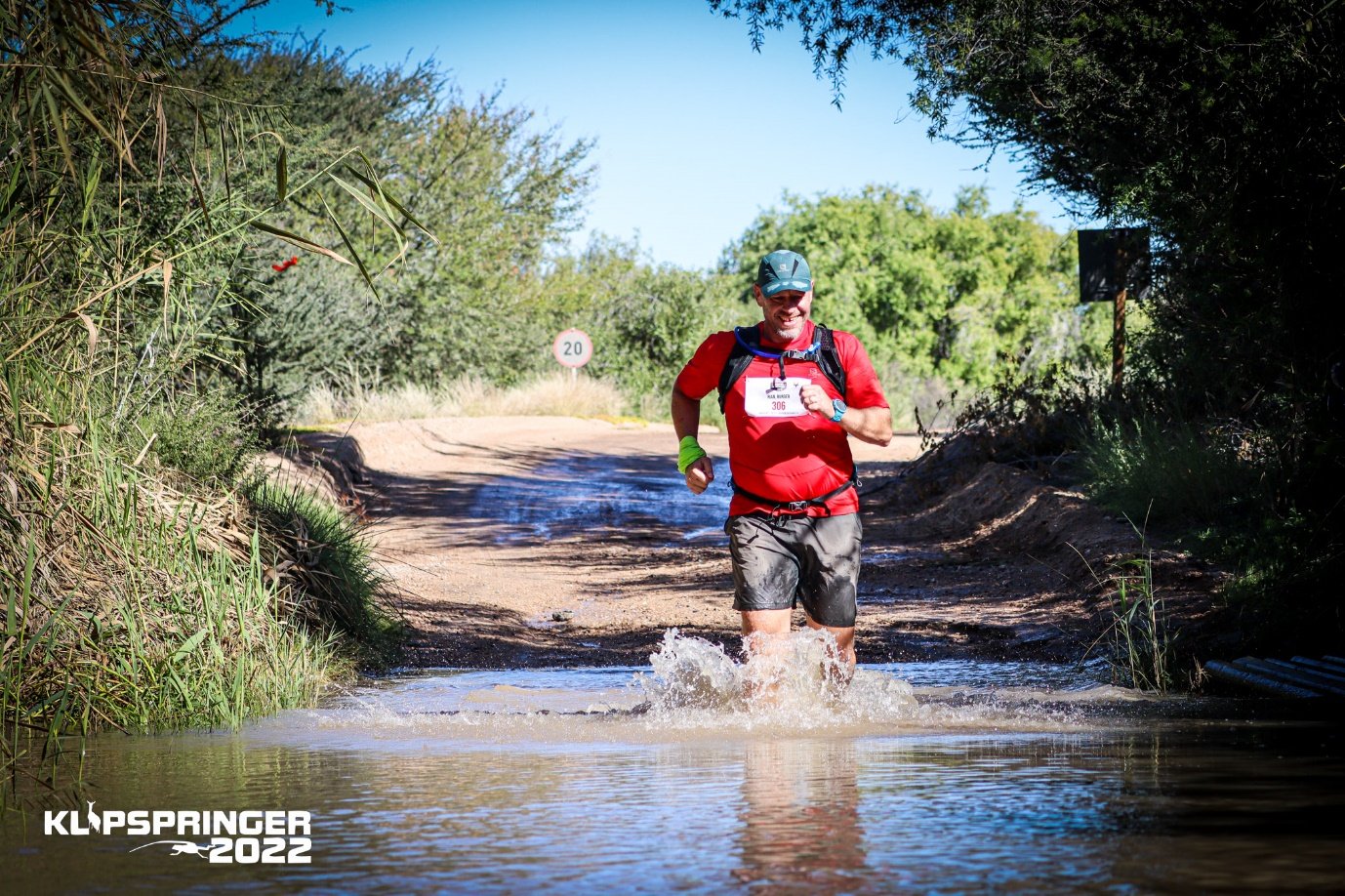
DIRECTIONS: From the Park head back towards Kakamas (approx. 39km). About 1km after the traffic light and petrol stations in Kakamas you will cross the bridge over the Orange River. Shortly after crossing the bridge you will take the turn off to the left following N10 / Riemvasmaak / Namibia. (This is where you will turn off to the right if you are coming from Upington, just before the big bridge over the river). The turn off here is pretty much impossible to miss AND there is a very prominent Khamkirri marker. From here follow the Khamkirri and Riemvasmaak signs at every junction. There is 3km of tar road, then 4km of good dirt road to the Riemvasmaak / Lutzputs split (follow Riemvasmaak to the left). After 20.5km of good dirt road you will come to the small community of Vaaldrift, and about 1km further on is the Khamkirri Resort on your left, and the actual Race Start & Finish is approximately 5km further on the same road. The roads are in good condition, but please avoid the temptation to speed up – there are a couple of corrugated sections that you don’t want to be driving too fast on, and after Khamikirri a couple of deceptively low dry river bed crossings. There is ample parking at the Start / Finish area but please park considerately and well to the side of the road to allow for vehicles turning around.

Entries

Please note that online entries are closed! However we have been receiving quite a few enquiries from runners who missed the chance to get their online entries in in time but are desperate to run, so we have decided to accommodate them with late entries at Registration in the Park on Friday afternoon. If you have any of your running friends who fall into this category you can let them know that they will be able to enter in person. They will be able to pay in cash, with or by EFT only (no credit cards), and their entry will NOT include a race shirt.

Registration & Pre-Race Briefing

Registration will take place at the Augrabies Falls National Park Conference Centre (just before Reception) on Friday afternoon 1 May from 15h00 – 18h00, where you will register and receive your race pack and race number. There will be a small Registration facility at the Start on both Saturday and Sunday mornings for those people who absolutely cannot make it on Friday – for those planning on making use of this it is recommended that you are at the Start to register by no later than 06h00.

There will be no physical Race Briefing at the venue, but rather we will distribute a Virtual Race Briefing video in the week before the Race. This means that runners do not have to hang around the Park until 19h00 on Friday evening after they have registered, and they can watch and re-watch at their own convenience.

DIETARY REQUIREMENTS

It gets harder every year to cater for the increasingly wide range of dietary preferences we all have, but we sure try! If you have any restrictions or strong preferences (vegetarian / vegan / gluten free) please indicate them by return email before midnight Monday 22 April so we can prepare as best we can to ensure no one starves. If you eat anything and everything you can ignore this.

Race Tip #2 – Following the trail and Orientation

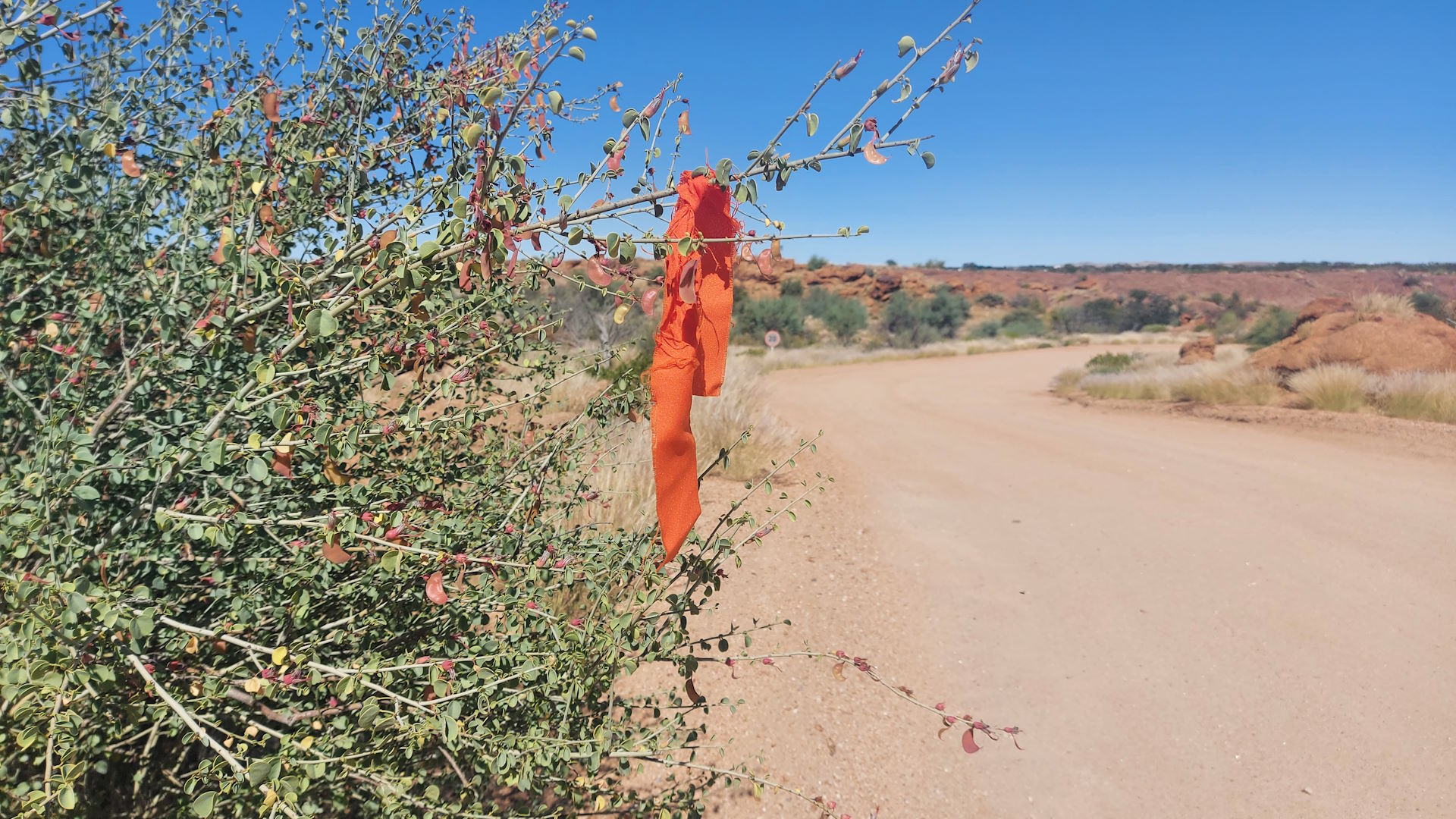
Following the trail and NOT GETTING LOST is one of the most important aspects of trail running. Many a race, including some of the world’s biggest, have been won or lost because of a wrong turn at a critical time! Don’t let it be you! The Klipspringer trails will be comprehensively marked and nobody should get lost, but pay attention! Day One will be marked with specific highly-visible Klipspringer orange ribbon markings, and Day Two will be marked with ribbon AND with traditional SANParks Hiking Trail markings (remember that Day Two IS the legendary Klipspringer Hiking Trail). Please always be aware that this is a remote and inaccessible trail in extremely tough terrain. It is unlike the Otter Trail, for example, where the trail is kept clear and visible by the feet of thousands of hikers and tourists every year, and where if the ocean is not to your left, you know you’ve gone wrong somewhere. In addition, it is not just marketing when we say that the remote Northern Section of the Park has the course running through parts that have literally not seen human feet! So although you shouldn’t, there is always the possibility of finding yourself off the trail. Please note that the race maps are NOT navigation standard and the best advice here is that each and every runner take responsibility for their own run – do NOT just follow other runners, always be looking for the next trail marker, and pay attention to the actual DIRECTION of the arrows and trail markers (and Race Organiser instructions in Race Briefings). Also try and just be generally aware – if you’ve run for more than 100m – 200m without seeing a marker, the chances are that you are off the trail and should double back to the last one you saw. We will repeat this advice many times before the Race!

Race Tip #3 – Race Nutrition

Now is the time to start planning your Race eating. Yes there will be a LOT of DELICIOUS (and NUTRITIOUS) stuff at the Water Tables so you will definitely NOT go hungry. However it always pays to think of anything in particular that you might like to glug or gobble with you on a long hard day out on the trails and have it with you – when you need it that energy bar or banana is worth its weight in gold!. It also pays to have an emergency stash of something that can hit that spot if you do hit an energy wall in between Tables.

Enjoy this last week. Take it easy and stay injury-free, and keep your eyes on your inbox. Looking forward to special experience next weekend out out the Augrabies Falls National Park.

2026 – Pre-race Briefing #1

KLIPSPRINGERS!

2 weeks and counting!

For those new to the Klipspringer, we found that even before the pandemic turned everything virtual, our electronic Pre-race Briefings were a very popular and useful method of communication before the event. It’s a great way to provide news, updates, race requirements and changes. It is also a convenient place to put out some race tips, which many of you have asked for, and some training tips for those entrants who are relatively new to trail running. All of the important info will also be put up on the race website and Facebook Page. And of course, as usual, please do not hesitate to contact me directly with any specific questions you may have.

Entries

Remember only Paid Entries are confirmed. This year we will accept Race Weekend Entries subject to capacity, so if you have one of those last-minute-special wife, husband or friend who wakes up late and wants to come with you to run, they will be able to join you BUT they won’t be able to get a race shirt.

Compulsory & Recommended Equipment

Being a desert run in winter, one of the upsides of being virtually guaranteed no rain is that it makes it easy to compile the compulsory equipment list – water, phone, whistle and space blanket! Challenge competitors will be required to carry a minimum of 1.5 litres of water from the Start, and Lite competitors a minimum of 1 litre. Why? The idea is that runners have sufficient water to get them from watering station to watering station. It is properly DRY and often very HOT out there, even at this time of the year. For most of us running in the desert, it is not even a thought that this 1.5 litres could last for the whole race. For you racing snakes used to running with very little water and then hydrating like mad at the Finish, this includes you! Regarding space blankets, remember that much of the precaution around the idea of having a Compulsory Kit requirement is not aimed at your perfect running day but rather that day where things go wrong. A missed step and a broken leg on an inaccessible stretch of trail, shock sets in and your core body temperature plummets – even in +30C that space blanket can literally save your (or somebody else’s) life. Please also note that we said that we are “virtually” guaranteed of a dry run. We are unfortunately suffering the unpredictable effects of climate change, so as we all know, anything could happen. Final kit requirements will thus only be confirmed closer to the time. See full COMPULSORY KIT LIST here.

Carry Your Own

As we have for the past few years, runners will be required to carry their own drinking containers. The idea here is to significantly reduce the Klipspringer footprint on our uniquely pristine environment. Runners will need to carry their own hydration packs and use those to fill up at Aid Stations, OR carry portable / collapsible cups OR their own flasks or water bottles. Runners will be allowed to carry normal disposable plastic water bottles, which although not ideal are definitely recyclable AND by definition they are then no longer “single-use”.

River Level

Many of you will have seen the news around the recent heavy flows over the Falls. We’re not expecting the water to still be so high on Race Weekend, and hopefully nothing near last year’s flood levels, but we ARE expecting higher than usual flows again, making for an altogether spectacular experience. That being said, there are a lot of factors effecting this, and we have to be ready with our contingency plans if they become necessary. Keep your eyes on your inboxes and the Klipspringer Facebook page to make sure you don’t miss any updates.

Preparation

We are proud to tell you that the Klipspringer field of runners ranges from some of the most experienced and accomplished trail runners in the country to road runners who are completely new to the joys and demands of trail running. As such, many of you may know a lot of the training and race tips that we will be sharing from time to time, but hopefully some of you may find them useful. For more comprehensive info check out TRAINING TIPS

Race Tip #1: Footwear and Accessories

This is true Kalahari Desert trail running. It is hot, hard and technical. We do not prescribe specific footwear, and certainly would not want to tell those hard-core barefoot runners that they have to wear shoes, but we do ask that you take your footwear seriously for this race. Protect your feet! In addition, being the desert, expect to run through a fair amount of soft sand which can get into your shoes. It shouldn’t be a major problem, but it does cause some discomfort as it builds up. It is quite fine sand so it also tends to get into your socks, which wastes time having to stop to take off shoes & socks to get rid of it. Gators might help but we find that sometimes they add some discomfort and extra weight, and sometimes don’t actually cover the parts of the shoe where the sand gets in. Test them before Race Day! If you have a choice of shoes to wear, look for ones that are less likely to let sand in through the actual material.

Training Tip #1: Train with Weight

Train with your hydration pack. As any trail runner who has run for more than a couple of hours with their pack knows, it really helps to have your back, neck and shoulders conditioned to the extra weight. This is even becoming a thing for road runners as more and more road events go green and require participants to be more self-sufficient and less reliant on those awful plastic sachets. We recommend that you estimate how much weight you will be carrying on race day, and add a couple of kilograms for training runs. It is also important to get comfortable with your pack in terms of sizing, strapping, zips and pockets, and the actual hydration refill system – you don’t want to be finding stuff out on Race Day!

That’s it for now. Good luck with this important last two weeks, and as always feel free to shout with any questions.

Looking forward to seeing you all in the Desert!

Warren & the Klipspringer Team

2025 Pre-race Briefing #2

Klipspringers!

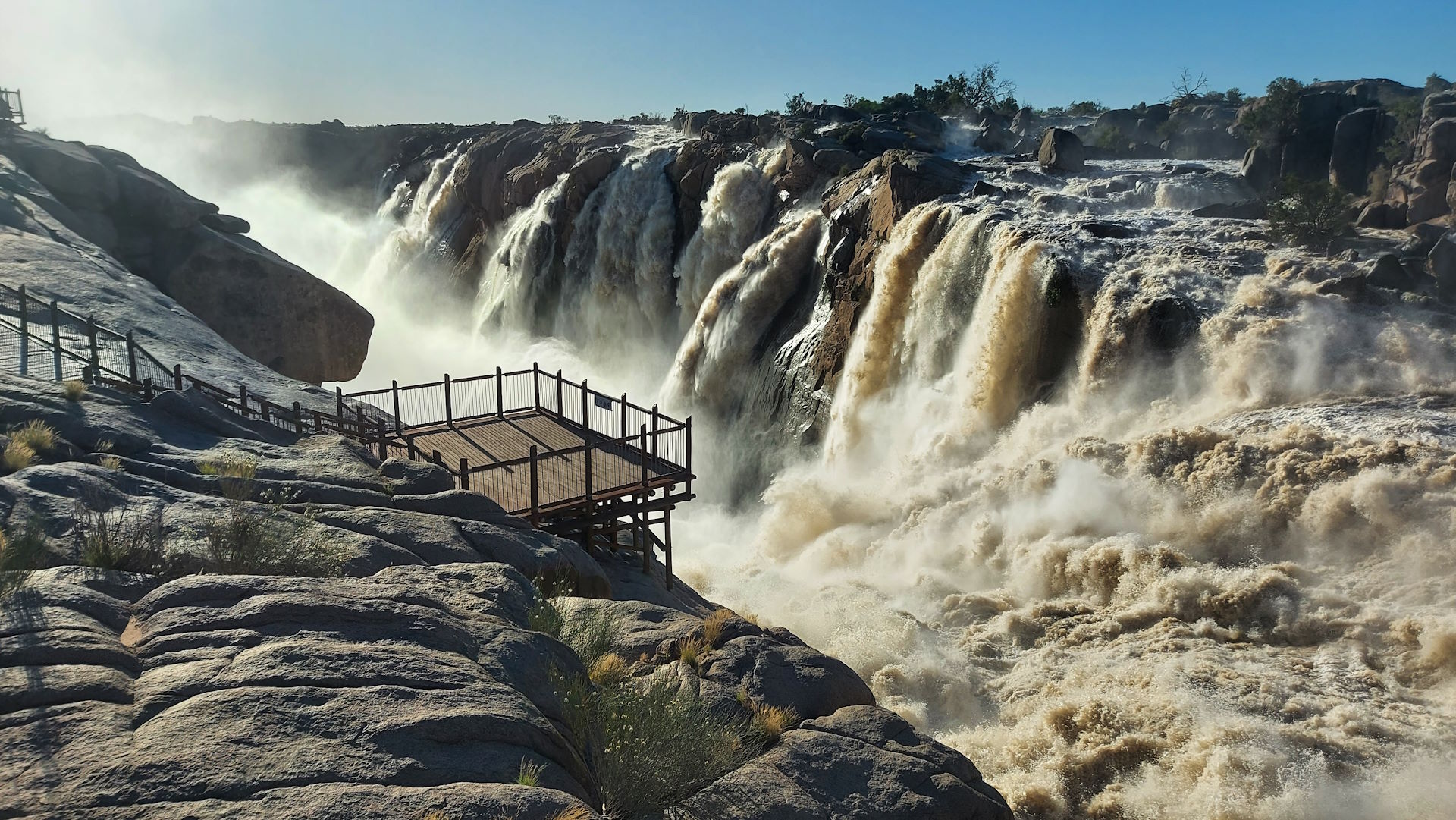
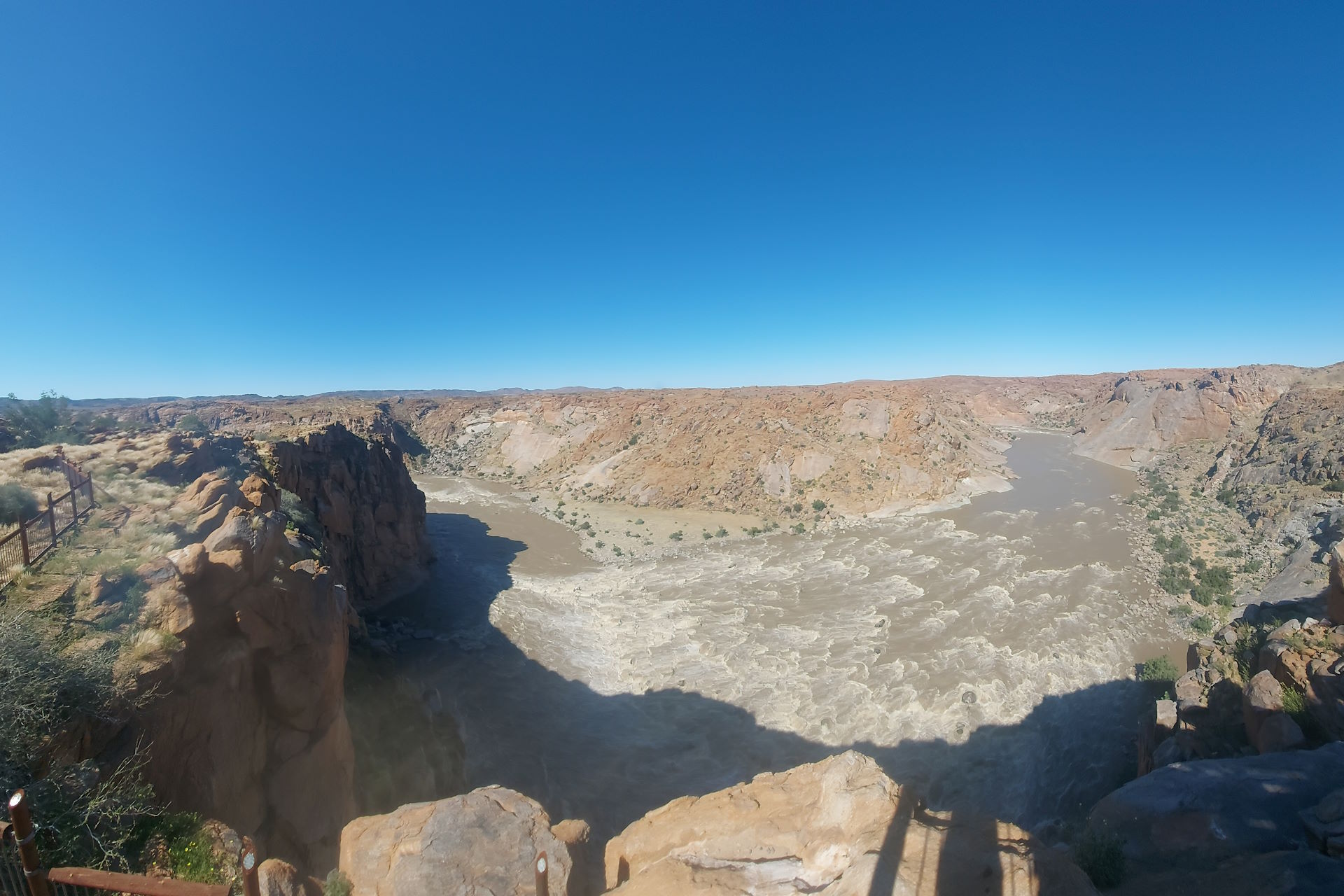
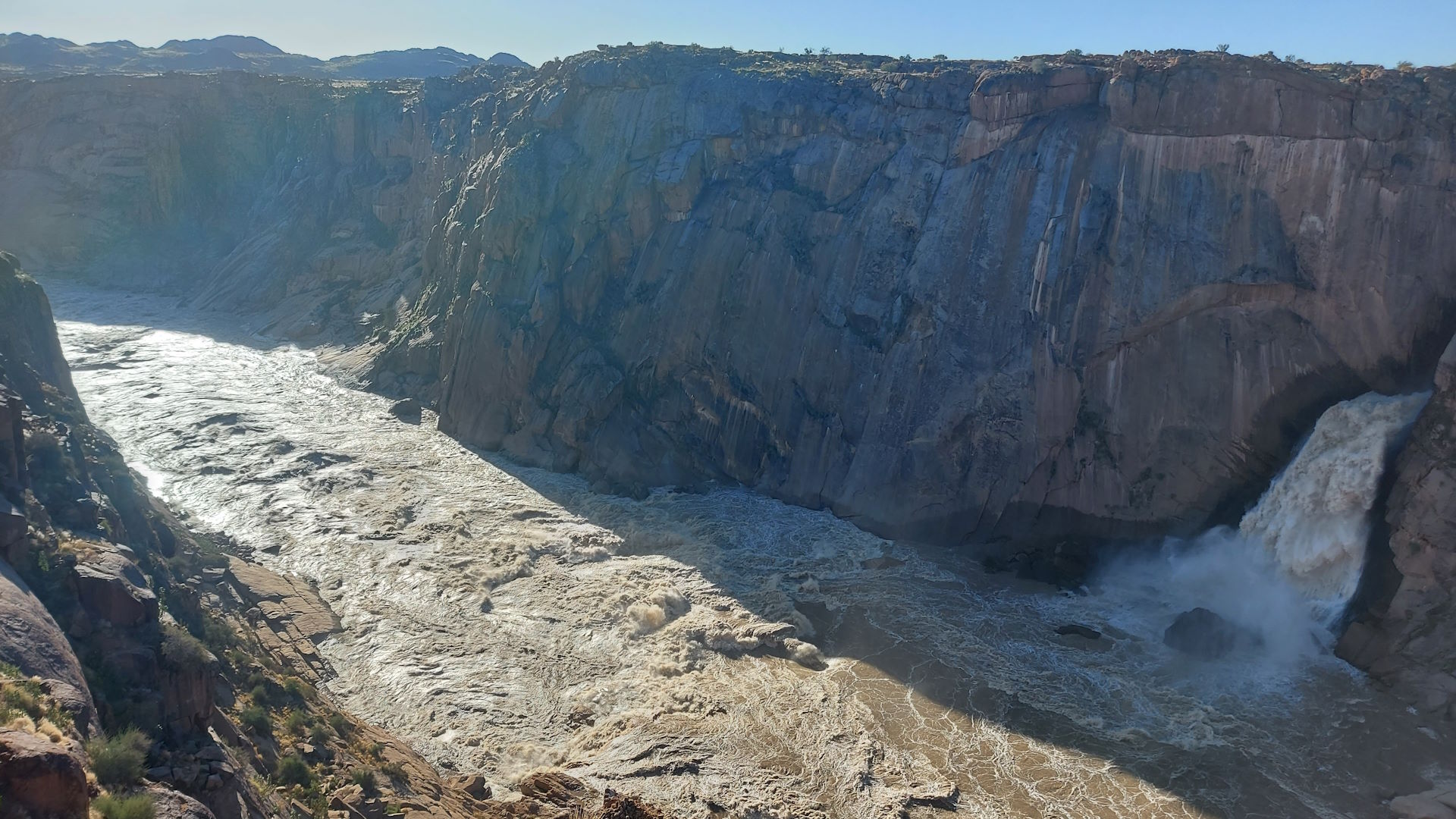
First things first. As things stand, the flow of the Orange River over the Falls is predicted to peak on the Thursday/Friday before Race weekend at approximately 3000 cumecs (cubic metres per second). For some context, those who were part of Klipspringer 2022 will remember the spectacular scenes we got to see that year, and how we had to implement a few Plan Bs. The flow that weekend was around 2000 cumecs! (Images below were from some of the route scouting a couple of days before the Race Weekend in 2022)

This means that we can look forward to experiencing the River and the Falls as few are ever lucky enough to do, but it also means we can expect some disruption to our race plans. At the moment we can advise that the Khamkirri Ferry will definitely not be able to operate next weekend, so we will all be driving ourselves over the River as required depending on where we’re staying. We will send out a dedicated Directions email for getting to the Start on Day One during the course of next week if anybody needs it.

Entries

Please note that entries are closed! However we have been receiving quite a few enquiries from runners who missed the chance to get their online entries in in time but are desperate to come and run next to a raging Orange River. We will accommodate them with late entries at Registration in the Park on Friday afternoon. If you have any of your running friends who fall into this category you can let them know that they will be able to enter in person, they will be able to pay in cash, with Snapscan or by EFT (no credit cards), and their entry will not include a race shirt.

Registration & Pre-Race Briefing

Registration will take place at the Augrabies Falls National Park Conference Centre (just before Reception) on Friday afternoon 2 May from 15h00 – 18h00, where you will register and receive your race pack and race number. There will be a small Registration facility at the Start on both Saturday and Sunday mornings for those people who absolutely cannot make it on Friday – for those planning on making use of this it is recommended that you are at the Start to register by no later than 06h00.

There will be no physical Race Briefing at the venue, but rather we will distribute a Virtual Race Briefing video in the week before the Race. This means that runners do not have to hang around the Park until 19h00 on Friday evening after they have registered, and they can watch and re-watch at their own convenience.

Klipspringer Race Briefing

Race Tip #2 – Following the trail and Orientation

Following the trail and not getting lost is one of the most important aspects of trail running. Many a race, including some of the world’s biggest, have been won or lost because of a wrong turn at a critical time! Don’t let it be you! The Klipspringer trails will be comprehensively marked and nobody should get lost, but pay attention! Day One will be marked with specific highly-visible Klipspringer orange ribbon markings, and Day Two will be marked with ribbon and with traditional SANParks Hiking Trail markings (remember that Day Two is the legendary Klipspringer Hiking Trail). Please always be aware that this is a remote and inaccessible trail in extremely tough terrain. It is unlike the Otter Trail, for example, where the trail is kept clear and visible by the feet of thousands of hikers and tourists every year, and where if the ocean is not to your left, you know you’ve gone wrong somewhere. In addition, it is not just marketing when we say that the remote Northern Section of the Park has the course running through parts that have literally not seen human feet! So although you shouldn’t, there is always the possibility of finding yourself off the trail. Please note that the race maps are not navigation standard and the best advice here is that each and every runner take responsibility for their own run – do not just follow other runners, always be looking for the next trail marker, and pay attention to the actual direction of the arrows and trail markers (and Race Organiser instructions in Race Briefings). Also try and just be generally aware – if you’ve run for more than 100m – 200m without seeing a marker, the chances are that you are off the trail and should double back to the last one you saw. We will repeat this advice many times before the Race!

In view of expecting to have to make some changes to the normal routes, which we will only know closer to the time, please pay extra attention to all info and Race Briefings on routes and route markings!

Klipspringer Race Briefing

Race Tip #3 – Race Nutrition

Now is the time to start planning your Race eating. Yes there will be a lot of delicious (and nutritious) stuff at the Water Tables so you will definitely not go hungry. However it always pays to think of anything in particular that you might like to glug or gobble with you on a long hard day out on the trails and have it with you. It also pays to have an emergency stash of something that can hit that spot if you do hit an energy wall in between Tables.

Enjoy this last week. Take it easy and stay injury-free, and keep your eyes on your inbox. Looking forward to special experience next weekend out out the Augrabies Falls National Park.

Klipspringer Race Briefing

2025 Pre-race Briefing #1

Klipspringers!

2 weeks and counting!

For those new to the Klipspringer, we found that even before the pandemic turned everything virtual, our electronic Pre-race Briefings were a very popular and useful method of communication before the event. It’s a great way to provide news, updates, race requirements and changes. It is also a convenient place to put out some race tips, which many of you have asked for, and some training tips for those entrants who are relatively new to trail running. All of the important info will also be put up on the race website and Facebook Page. And of course, as usual, please do not hesitate to contact me directly with any specific questions you may have.

Entries

Remember only Paid Entries are confirmed. If you have entered but not yet paid we cannot guarantee you a spot as we fill up. Similarly if you’ve entered but your friends have not yet, make sure you remind them ASAP to avoid them being disappointed. Subject to capacity entries close midnight Monday 21 April 2024. Entries can be found here.

Compulsory & Recommended Equipment

Being a desert run in winter, one of the upsides of being virtually guaranteed no rain is that it makes it easy to compile the compulsory equipment list – water, phone, whistle and space blanket! Challenge competitors will be required to carry a minimum of 1.5 litres of water from the Start, and Lite competitors a minimum of 1 litre. Why? The idea is that runners have sufficient water to get them from watering station to watering station. It is properly dry and often very hot out there, even at this time of the year. For most of us running in the desert, it is not even a thought that this 1.5 litres could last for the whole race. For you racing snakes used to running with very little water and then hydrating like mad at the Finish, this includes you! Regarding space blankets, remember that much of the precaution around the idea of having a Compulsory Kit requirement is not aimed at your perfect running day but rather that day where things go wrong. A missed step and a broken leg on an inaccessible stretch of trail, shock sets in and your core body temperature plummets – even in +30°C that space blanket can literally save your (or somebody else’s) life. Please also note that we said that we are “virtually” guaranteed of a dry run. We are unfortunately suffering the unpredictable effects of climate change, so as we all know, anything could happen. Final kit requirements will thus only be confirmed closer to the time. See full Compulsory and Recommended Equipment List here.

Klipspringer Challenge Briefing

Carry Your Own

As we have for the past few years, runners will be required to carry their own drinking containers. The idea here is to significantly reduce the Klipspringer footprint on our uniquely pristine environment. Runners will need to carry either their own hydration packs or portable / collapsible cups or their own flasks or water bottles. Runners will be allowed to use normal disposable plastic water bottles which although not ideal are definitely recyclable and by definition they are then no longer “single-use”.

River Level

Many of you will have seen the news around the current incredible flows over the Falls (and upstream and downstream). We’re not expecting the water to still be so high on Race Weekend, but we are expecting higher than usual flows making for an altogether spectacular experience. That being said, there are a lot of factors effecting this, and we have to ready with our contingency plans if they become necessary. Keep your eyes on your inboxes and the Klipspringer Facebook page to make sure you don’t miss any updates.

Preparation

We are proud to tell you that the Klipspringer field of runners ranges from some of the most experienced and accomplished trail runners in the country to road runners who are completely new to the joys and demands of trail running. As such, many of you may know a lot of the training and race tips that we will be sharing from time to time, but hopefully some of you may find them useful. For more comprehensive info check out Training Tips

Klipspringer Challenge Briefing

Race Tip #1: Footwear and Accessories

This is true Kalahari Desert trail running. It is hot, hard and technical. We do not prescribe specific footwear, and certainly would not want to impose on those hard-core barefoot runners, but we do ask that you take your footwear seriously for this race. Protect your feet! In addition, being the desert, expect to run through a fair amount of soft sand which can get into your shoes. It shouldn’t be a major problem, but it does cause some discomfort as it builds up. It is quite fine sand so it also tends to get into your socks, which wastes time having to stop to take off shoes & socks to get rid of it. Gators might help but we find that sometimes they add some discomfort and extra weight, and often don’t actually cover the parts of the shoe where the sand gets in. Test them before Race Day! If you have a choice of shoes to wear, look for ones that are less likely to let sand in through the actual material.

Klipspringer Challenge Briefing

Training Tip #1: Train with Weight

Train with your hydration pack. As any trail runner who has run for more than a couple of hours with their pack knows, it really helps to have your back, neck and shoulders conditioned to the extra weight. This is even becoming a thing for road runners as more and more road events go green and require participants to be more self-sufficient and less reliant on those awful plastic sachets. We recommend that you estimate how much weight you will be carrying on race day, and add a couple of kilograms for training runs. It is also important to get comfortable with your pack in terms of sizing, strapping, zips and pockets, and the actual hydration refill system – you don’t want to be finding stuff out on Race Day!

That’s it for now. Good luck with this important last two weeks, and as always feel free to shout with any questions.

Looking forward to seeing you all in the Desert!

Warren & the Klipspringer Team

Klipspringer Challenge Briefing

2024 Pre-race Briefing #3

Klipspringers!!

One Week To Go!

Klipspringer Challenge

Although we are still too far away to be able to confidently rely on weather forecasts for the Race Weekend, we are close enough that there actually are forecasts. Right now it’s hinting that we should be a little cooler than it’s been for the past couple of weeks at the end of a hot summer, but we are still in for a warm weekend! Pack your sunblock and take your hydration seriously!

Physio

We are thrilled to have the skills of some of the local Upington physios as Race Physio to heal broken bones and ease tired muscles. 20 minutes of miraculous recovery will cost you just R200. Set up will be at Khamkirri on Saturday and in the Park on Sunday. Sessions will be allocated on a first-come-first-served basis.

Park Admin

As usual we have a couple of admin shortcuts to help speed through the Park entry & exit processes. First please find attached the SANParks Gate Entry Permit (Click Here). Please download this and print and complete, including the names of all vehicle passengers, before you get to the Park gate. We are not expecting any real bottlenecks but early in the morning this will definitely help, especially for those entering the Park for the first time early on Sunday morning.

Registration: 15h00-18h00 on Friday at the Park Conference Centre just outside Reception. There is no physical Race Briefing following Registration this year so no need to hang around. Please try and get your registration sorted out as early as possible to avoid queues later on.

SANParks Conservation Fees: Remember that all visitors to South Africa’s National Parks pay a small daily Conservation Fee (Adults R74/day; Children under 11yrs R37/day SA Citizens). Race participants will not need to pay Conservation Fees but all family / friends / other visitors will. If you are not staying at the Park Conservation Fees will not be applicable when you just enter for Registration on Friday and leave, but they will be applicable for all Day Visitors accompanying runners into the Park on Sunday. Please make sure applicable Conservation Fees are paid before leaving so you can receive the necessary Exit Permits required to leave the Park.

Attached is the official Klipspringer Race Logo (Click Here). Please download and either print it out to display on your dashboard OR save a copy to your phone to display at the Park gate. This will act as a pass-out for anybody needing to exit and re-enter the Park again. People staying in the Park will also receive a hard copy Weekend Pass when they check in.

Please remember that everybody staying at the Park will need to officially check out and pay when they leave, at which point they will receive their Exit Permit from Reception.

Klipspringer Challenge

Other Admin

Please remember that Day One is a remote start with no facilities, so anybody needing a Pre-Start toilet run, please make use of the facilities at Khamkirri on your way to the Start. Similarly runners coming from Upington side, you can stop at Khamkirri for a quick toilet break before the Start (Khamkirri is about 7km before the Start Point). There will also be awesome hot coffee / tea / hot chocolate on sale at Khamkirri in the morning. Please remember your headlamps – the sun is only rising at around 07h00. And something warm. There’s none so cool as a crisp desert dawn!

A full Race Village will be set up at Khamkirri where you can pick up your delicious complimentary lunch and relax your tired legs on the awesome Khamkirri deck enjoying a well-deserved post-run beer or two.

Please bring cash for incidentals like coffee at the Start on Sunday or extra food or drinks – signal and connectivity can be sketchy and can impact electronc payment systems.

Reminder for those still needing to Register on Saturday or Sunday mornings to please be at the Start by 06h00.

Khamkirri to Start – approx 15min (7km)

Previous Pre-race Briefings

Please also re-acquaint yourselves (or acquaint yourselves) with previous Pre-Race Briefings for all the important Race Info, especially around the Day One Start logistics and the Khamkirri Ferry, as well as important times, race rules and compulsory kit requirements.

Pre-race Briefing #1

Pre-race Briefing #2

See you all next weekend!

Your Klipspringer Team

race briefing #1