The Difference Between Trail Running & Road Running

Ever since I fell in love with trail running all those years ago, I never understood how every road runner who set foot on a trail was not immediately converted and never looked back. How to beat the thrill of single-track trail through spectacular natural environments, wildly diverse landscapes, brutal climbs in beautiful mountains, constantly changing trail conditions? I mean surely it doesn’t compete with the drudgery of flat tarmac, traffic, suburban street sameness, perfectly measured race distances and perfectly regular water stations with a gazillion plastic sachets lying dead in the road? And yet obviously it did.

The difference between trail running and road running

As a passion for trail running evolved, more by luck than strategic business plan, into becoming a trail event organiser, the question became a commercial one: How to convert some of the hundreds of thousands of dedicated road runners that line up at the hundreds of organised road races every weekend to the joys of trail!
10 years later I have not found the answer. But in analysing the question I have come to a few important understandings around some of the key but less obvious differences between the appeal of road running versus trail running. Hopefully this is helpful in my crusade.

1. Costs

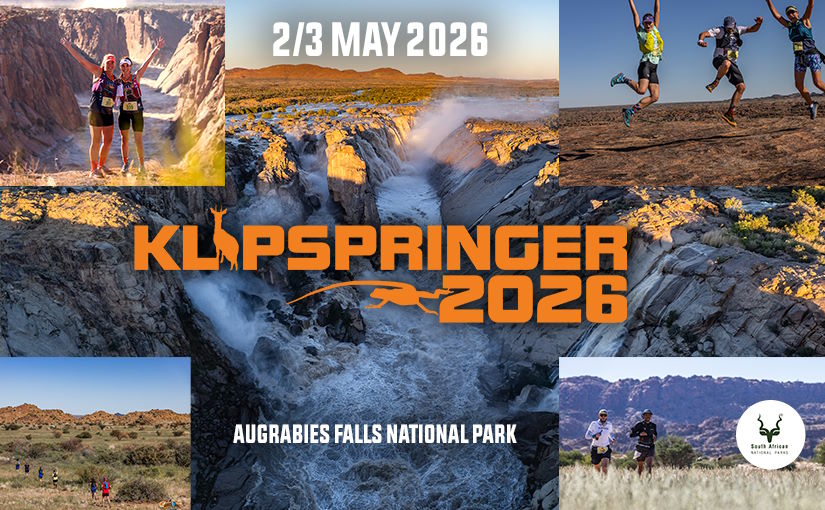
Trail races, and trail running in general, are by definition more expensive. Most of us live in cities or towns where we can step out of our doors and just start running on the road. Almost none of us are lucky enough to have trails on our doorsteps, and for most of us, “good” trails are a long way away. To spend any time on trails is going to take more time and cost more money in terms of transport and, for the “destination” trail events, accommodation. There is no getting around this, but there is a compromise. Every weekend in or around the major centres there are small affordable trail races that, as often as not, people do not know about. So before thinking that they need to commit to getting to the Drakensberg for Runtheberg, the Garden Route for The Otter Run, or the Kalahari Desert for the Klipspringer Challenge, roadies can explore their trail curiosity closer to home. Most running clubs these days have dedicated trail sections, and of course there’s Google. It’s not hard to investigate the options. Just in Joburg, as an example, there is the authentic WildJoburg Trail Run in the mountainous South that most people living North of the Hillbrow Tower never think about, as well as wonderful and safe trail destinations like Klipriviersberg, Rietvlei and Wolwespruit in Pretoria. Swap out your planned 10-15km road run one weekend with 8-12km on dirt – you won’t be sorry!

The difference between trail running and road running

2. Kit

Trail running does require more kit & equipment than road running, where essentially all one needs is a pair of running shoes. Compulsory Equipment lists can include things like torches, space blankets, waterproof rain jackets and even GPS devices, but the one stock standard requirement is carrying your own water. Many experienced trail runners use different systems for different types of outings, alternating between handheld flasks, waist-belts and full hydration packs. It’s easy enough through a fairly cheap trial and error process to find what works for you. The advantages of carrying your own hydration are twofold. First, more and more road races are specifying some kind of “carry your own” requirement. This trend will only continue so get out ahead of the curve. Second, the sense of freedom that comes from being self-sufficient is exhilarating. There is nothing more liberating than knowing that you have everything you need on your back and that you can run as long and as far as your legs will allow.

3. Shoes

A lot is made of the need for dedicated trail shoes. There are specialist mud shoes, technical shoes, rock shoes, fell running shoes, wet weather shoes, cold weather shoes, desert shoes and so on. Shoe shopping can be fun but also expensive. Remember this – nobody has yet died from running a trail in road shoes. There’s no reason you can’t run your first few trail races in your trusty pavement pounders. That being said, most runners are generally outdoorsy, active types, and at the very least a pair of trail shoes will stand you in good stead when it comes to hiking. For entry level newbies just trying trail out for size, another good option could be any one of a number of crossover road / trail shoes offered by most recognised brands.

The difference between trail running and road running

4. Pace & Speed

Road running is all about pace, speed and PB’s. Trail running is not. Strangely enough I think that this is one of the reasons new converts find trail running so hard – they are trying to run everything. Experienced trail runners know that on any good trail there are parts that are either not runnable or just not worth running in terms of the reward on effort. Roadies struggle to get their heads around this and often make the mistake of either running the unrunnable bits and finding the whole experience so hard that they hate it, or they are devastated by a pace that is significantly slower than their road pace for the same distance. While obviously similar, road running and trail running are very different disciplines. Being aware of this up front will allow you to enjoy rather than fight the differences. When you hit a steep technical climb put the watch away, forget about running, break out the energy bar and get ready to take some pictures at the top.

5. Flexibility

Remember that trail running is a relatively young sport. Many of the Founding Fathers and Mothers of the sport are still with us, and trail runners generally see themselves as some kind of muddy bloody pioneering mavericks. In our grandparents’ day short distance running was on a track, longer distance running was on flat city streets, a few nutcases ran Cross-Country on grass, and anything on a trail or in the mountains was called Hiking. That maverick spirit lives on. Don’t be surprised by trail races that don’t have prizes or give medals, don’t be surprised by a shortage of aid stations, or by aid stations serving Sunday roasts and a selection of beer and wine. Especially don’t be surprised by deviations in advertised distances. An unwritten rule of thumb for an authentic trail race is that anything within a 10% margin of the advertised distance, either over or under, is OK. This is not just laziness or some kind of protest against uniformity. It reflects the reality on the rocky ground – three people measuring a rugged 50km mountain trail that has 3000m of net vertical ascent with the same GPS devices set to the same settings are guaranteed to get fairly significantly different readings. Know this and take it in your stride. The Race Director that gets the measurement of a road marathon wrong may get fired; the Race Director that is told that runners ran an extra couple of kilometres in a mountain ultra will likely reply jokingly that the runners can pay for the balance at next year’s race.

The difference between trail running and road running

6. Blood

An old trail running adage goes “It’s not a real trail run if there isn’t any blood”. Every trail runner with half a brain acknowledges the idiocy of this concept, but roadies will be horrified to know that it kind of holds true for most of us. There’s a reason that many trail races specify a basic first-aid kit as part of the compulsory equipment list. The important thing is to be prepared. The simple fact is you are more likely to fall while running down a steep rocky descent than on a flat road, and you are more likely to hit your head on a low branch while running through a forest than on a street sign while running through a suburb. The good news is that it is definitely possible to train yourself to concentrate better and for longer, to improve your peripheral vision, and, critically, to fall with minimum damage. Aren’t those good skills for everyone to have anyway?

7. Vert & Technicality

Net Vertical Ascent, affectionately referred to as “Vert”. This is one of the stand-out points of departure between tar & trail. Of course many road races have uphills as a factor, with our legendary Comrades Marathon the first to come to mind, going so far as to have alternating UP and DOWN races. Vert, however, is one of the fundamental strands of the DNA of trail running, with the elevation profile being almost as important as the distance, in some cases more so. Trail running even has a thing called a “Vertical Kilometre” – it’s as hard as it sounds! The third strand of trail is technicality. “Non-technical” refers to a pretty flat course that almost emulates running on a road. Very runnable, easy to get into a rhythm, and fast. Then there are levels of technicality, yet to be officially or uniformly graded to any system, that add exponential levels of complexity and difficulty to a run. Rockiness, slipperiness, loose gravel, soft sand, mud, vegetation, ice & snow and water crossings are examples of things that contribute to the technicality of a run. And so we begin to understand why PB’s are not a huge feature in trail running!

The difference between trail running and road running

On reading this it may seem that this is less a list of the differences between road and trail running as it is a list of things that make trail running harder. It is important to warn against this approach. It’s different disciplines, but the same sport. It is all running. Good road runners are likely to be good trail runners, and vice versa. Being a 10km champion means you’ll probably run a fair marathon (with proper training) but it doesn’t mean you’ll win it. Similarly, being a road running champion mean you’ll likely be a fair trail runner, even if you’re not going to win it. Different disciplines. Runners used to bringing up the rear in a trail race may find themselves closer to the middle of the pack in a road race, and vice versa. Different disciplines. But the same sport. I’ve given up trying to convert road runners AWAY from tar, but I will never give up on exposing them to the absolute bloody grimy spectacular sheer self-sufficient natural exhilaration of trail running. Different disciplines, same sport. Until you’re doing both, you’re not getting the most you can get out of your love of running.

The difference between trail running and road running

If you THINK you’re lost, you probably are

Follow the markers (or GPS track)!!

But even then, as every experienced trailrunner has learned the hard way, running in wild places you WILL get lost! Being a good trail runner is not about NOT getting lost, but rather about how you deal with it when you do.

If you think youre lost you probably are

There’s a natural tendency amongst all runners to not want to give up distance you’ve already covered, ESPECIALLY if that distance has involved some ascent. Every runner’s natural instinct is to keep moving forward. However, this may be (and chances are, is) a mistake. If you ever reach a point on the trail where you start to doubt yourself and suspect you might be lost, stop, breathe, and think. If you’re on a marked trail, go back to the point you last saw a marker (markers generally have a rough “rhythm”, like every 50m or every 200m or only at turns and splits – feel the rhythm), or if you’re following a GPS track, go back on the track until you (or your device) can confirm that you’re “On Course” (to quote Garmin), and then carry on confidently knowing you’re on the right track. This can save time, wasted energy, and in extreme cases, even lives.

If you think youre lost you probably are

At all events and races, the marking is necessarily done in advance of race day. Sometimes quite far in advance. This, plus the fact that by definition we’re running in wild places with extreme elements and often curious wildlife (the stories about giraffe eating marking ribbons or baboons following the marking team and pulling markers off trees as fast as they put them up are NOT just urban legend – they happen), mean that one day you must expect to have to do some thinking for yourself. Be ready for that day.

If you think youre lost you probably are

As far as GPS-navigated routes go, there are two simple hacks to keep in mind that could make a big difference. First, know your device. Know what buttons do what, and know where to find the track you’re following if you somehow lose it. Once you’re following the line on your device it’s straightforward, but pressing buttons madly looking for the map that has disappeared with sweat in your eyes and in driving rain and howling wind is not a good strategy. Second, many routes involve a run out from the start, a big loop, and then a run into the finish on the same track. It pays to familiarise yourself with that first turn or even the direction you will be running initially. Many runners have lost valuable time at the beginning of their race by starting the loop in the wrong direction.

If you think youre lost you probably are

There’s a footnote: In trail running, there’s no such thing as “the wisdom of crowds”. There is a good chance that the person you’re following or the person following you is even more lost than you are. Do not just dismiss them out of hand, but in those inevitable “are we on the right track” discussions, it’s not considered rude to ask people to back up their opinions, however confidently they may be expressed. “Yes, this is right” – if that’s backed up by “I’ve done this race a few times and I know the route well”, it’s acceptable. So is “Check here on my GPS device, this where we are, and this is the track…”. “I’m sure we are on the right track” is NOT, and at all times be VERY AFRAID of “It feels right!”

Remember, it’s all part of the fun.

THE TRAIL RUNNING COMMUNITY

The reason we race isn’t so much to beat each other… but to be with each other.
– Christopher McDougall, Born To Run

Despite an explosion in popularity in the last decade, trail running remains something of a fringe activity. Similarly, the trail running community remains something of a counter-cultural anti-establishment underground bunch. Picture California surfing in the ‘60s or the London punk rock scene in the ‘80s. Breaking the mould. No rules, no uniforms, no adults…

OK we might be overstating that a bit, but there can be no doubt trail running attracts athletes and characters who like to do things differently. Just look at the insane Barkley Marathons’ legendary Lazarus Lake, or the mysterious late Caballo Blanco aka Micah True aka Michael Randall Hickman aka The White Horse of Copper Canyon, Mexico fame. Or Dirt Diva and tattoo junkie Catra Corbett, or the irrepressible baggie-shorted multi-hundred mile queen Courtney Dauwalter, or the smiling Catalonian mountain goat Kilian Jornet. There’s no shortage of characters in trail running.

The trail running community

But what else do these running hippies have in common besides huge talent and an underdeveloped understanding of “impossible”? A love for what they do and a love for the people that do it. They are all proudly part of the wonderful trail community.

Make no mistake, the competitiveness is strong in these guys, and they come to race! But it’s also obvious that behind the blood, sweat and medals, there’s almost a spiritual connection to the trail, to nature, and to the other strange runners who love this stuff as much as they do. No back-of-the-field runner has to think too hard about that time they limped in just before (or long after) Cut-Off, and one or more of the podium finishers was waiting at the Finish in the dark and the cold with a beer or hot chocolate to cheer them home.

The trail running community

Obviously a strong sense of community is not exclusive to trail running. Sport, by definition, attracts and brings out a lot of humanity’s best features. But there really is something unique about the bearded, tattooed, beer-loving, sometimes barefoot community of runners out there on the trails, challenging themselves, each other and often the toughest conditions nature can throw at them. Perhaps it’s the knowledge that you can die? No, trail running, even at its most extreme, is not like wing-suit diving. But we’ve all heard the stories of those fatal falls in the mountains, or the tragedy of the sudden freezing weather front hitting a group of runners with inadequate kit. As a Race Director I am sometimes asked to explain the rationale behind our Compulsory Kit Lists. I explain that that the whole idea is that we hope for the best but plan for the worst, but then I also always say that you are carrying that Space Blanket as much for you as for somebody else who may need it out there. There is definitely a camaraderie that develops between individuals heading out to face the elements knowing that they might be hours away from any real help should something go wrong, and knowing they may have to rely on, or be relied on, by each other.

The trail running community

This Community bond extends beyond just the runners themselves, driven perhaps by the sheer remoteness of it all. All race volunteers are very special folk, from city marathons to Parkruns, and must be cherished and valued. But the water table guys who lugged the Coke, fruit and potatoes up the mountain at 2am so the runners can have the best experience possible, or the shivering Checkpoint Marshall manning the mountain peak in the freezing rain so that the Race Directors can keep control of the field and not lose anybody, or the Racing Snakes who volunteer to sweep a race and keep the back-markers safe and in good spirits…. these really are the backbone of the sport. Whether you’re a medal chaser or a cut-off dodger, this is our community.

The trail running community

THE INEVITABILITY OF STEP-BY-STEP

Many people look at a race distance as just a lot of numbers, allowing themselves to be intimidated out of even starting by getting overwhelmed by the thought of the big distance at the finish. In fact, many people are put off starting to run at all because they are defeated by the thought of the aspirational distances (half-marathon, marathon, ultramarathon, Comrades) that dominate running in the public mind, so they don’t even get off the couch.

The Inevitability of step by step

The reality is that as intimidating as those big number distances sound, they are also just an accumulation of single steps. Assume an average person’s stride is a half a meter. 10km becomes 20,000 steps, a marathon becomes 84,400 steps, and so on. You might be reading this thinking that this is not helping, and that 84,400 steps is still a LOT, and you’d be right. The best way to illustrate the principle is by way of personal anecdote.

Years ago, I participated in the wonderful Whale of Trail race, a 55km ultra trail run of the famous Whale Trail Hike in the Western Cape’s incredible De Hoop Nature Reserve. I was in pretty good condition, but my day was a disaster from the get-go. At the start I discovered I had an hydration pack failure and couldn’t get water through the pipe into my mouth. With hindsight I can admit that the problem was runner failure and not equipment failure, but nevertheless I spent 11 hours taking off my pack and holding it at a particular angle every time I needed water.

Then, distracted by the hydration situation, I tripped and went over my chronically weak ankle within the first few kilometres. The pain was intense, but I’d been here before. I knew I would just have to let the initial agony subside and then run through the pain for the rest of the run. The problem was that once my ankle went once on any run, it became that much weaker and was more likely to go again. Which it did before 10km was complete.

The Inevitability of step by step

Now the Whale Trail route structure is very cool, with the first half running on great trails through wonderful fynbos covered hills inland towards the sea. The second half is along the coast, taking in dramatic rocky cliffs and glorious beaches (glorious for beachgoers, gruelling for runners), and much more technical. I hit the coast still in OK shape but knowing that my ankle was dangerously weak, with the technical stuff still to come. I took the time to stop and put on my orthotic support brace. This added stability, but it came at the cost of flexibility. I paid the price.

At about 30km, limping along some razor-sharp coastal rocks, I got to a ledge that needed a bit of a climb-down. No problem. I wasn’t jumping anywhere, so, taking a conservative approach, no one in sight ahead of me or behind me, I squatted down to negotiate the drop like an old lady. Boom, my quads cramped violently, I started falling over, stepped out to catch my balance, but my ankle had no give whatsoever, and down I went. It was about a 6-foot drop onto a big and luckily mostly flat rock. I didn’t fall badly (a valuable skill to work on as a trail runner), but I was hurt. I lay on my back, not moving for a while. In my head that was it, my race was over. I remember thinking that taking everything into account, no one will judge me for the DNF (Did Not Finish, in trail runner lingo).

I knew that there was a guy not too far behind me. My plan was to lie there, and when the guy came over the hill and saw me lying there, I was going to ask him to call the Race Organisers and tell them to send the medics, my day was done. I was comfortable to have bailed in my head.

I lay there. “Where’s this guy?” Nothing. Nobody came over the hill. No medics to the rescue (I guess I could have called the Organisers myself but somehow this didn’t fit in with my sense of the dramatic at the time. What can I say?). No guy. After a while I’m starting to feel foolish, just lying there. I start to do a systems check. Fingers, wrists, arms, nothing broken. Ankle throbbing but nothing broken lower down either. Lots of blood from some impressive-looking but superficial knee scrapes, a cut on my calf, and some blood in my eyes (pause for effect) from a (minor) cut on my forehead. I guessed I could stand, so I did. I was sore, but alive. I had to make a decision. I had one last lingering look for the guy coming over the hill, but nothing (I was to discover later that the guy, Hannes, had completely cramped out and had bailed some time before). I took a single tentative step with my good leg. I wobbled a bit but stayed on my feet. I tried the bad ankle. It was very sore but held up, and I knew from experience it would loosen up, as would the rest of my stiff, aching body. I decided to start moving forward. Limping, shuffling, not running by any definition. 2 steps became 10, 10 steps became 100, 100 steps became half a kilometre, half a kilometre became a kilometre. Step by step.

The Inevitability of step by step

At this point I honestly had no thought of successfully finishing the race. I had more than 20km to go. The race cut-off of 11 hours had sounded comfortable at the beginning, but I was now looking at the sun and my watch and thinking that even if I did make the distance, I wouldn’t make the time. I kept moving, forwards, step by step. What other options were there? I decided in my head that as long as I could keep moving forward, I would. I didn’t care if I missed the cut-off, I didn’t care if I got pulled off by medics or the Organisers, but I was not going to put up my hand and say “I give up”. One kilometre became two, two became five. Step by step.

The rest of the race was uneventful. The beach sections were brutal but also a relief because I could shuffle-run a bit without worrying about falling and doing more damage. I passed a few people and a few people passed me. It turned out that I was amongst the back markers who had been cut off some time before but had been short-coursed – transported by vehicle back to a point further down the route. A nice work-around. The company helped.

A huge boost was getting to an aid station and checkpoint, where I was not only allowed to carry on but told, optimistically, that I was on track to finish. Limping, walking, even some running. Step by step.

I remember the cut-off time of 5pm coincided with the winter sunset, and I remember crossing the finish line with 10 minutes to spare and the sun already below the horizon. I think I remember an overwhelming sense of relief rather than any heroic sense of triumph or victory. But I have never forgotten this race. I have since come to conclude that we learn so much more from the bad days, even the disaster days, than the days where everything goes smoothly. I learned that it’s not over until it’s over.

The Inevitability of step by step

And I learned about the Inevitability of Step-By-Step. The end might seem like a million miles away. On another planet, in another universe. But one step becomes five, ten steps become a hundred, a hundred steps become a kilometre. Yes, you might run out of time. Yes, you might be pulled off the course, but for as long as you are putting one foot in front of the other, you are getting closer with every step.

So, get off the couch! Graduate from Parkruns to 10kms, to 21s, to marathons, to ultras. It’s all just an accumulation of steps. Take the first step, the next one will follow.

HOW TO GET INTO TRAIL RUNNING

There are three types of people who are most likely thinking about how to get into trail running. The first is the dedicated road runner looking for something different, the second is the non-runner looking to start running and focusing on or just incorporating some trail, and the third is the ex-runner looking to start up again. The great news is that the advice to all is exactly the same. As the famous brand once said, Just Do It.

Running is unique amongst all sporting disciplines in that it is the one movement that comes completely naturally to all healthy human beings almost from birth. Yes, you can adjust your style and improve your form and become a better runner, but at its most elemental you don’t need kit, you don’t need equipment, you don’t need to learn how to do it – from a couple of years old, you can just do it.

How this translates into getting into trail running is simple. Find a trail and run.

How to get into trail running

Different types of trail?

What kind of trail, you may ask? It doesn’t really matter. There are many different types of trails: rocky, sandy, muddy, technical, hilly, climbing and more, and obviously the more one practises on any given one the better one gets at running it. The trick that many people do not realise is that running on ANY type of trail makes you a better trail runner on ALL trails.

What makes a “trail”?

It’s not a road.

How to get into trail running

The single biggest difference between trail and road is that on a trail you can’t close your eyes and just assume that your next step will be ok. Getting used to concentrating and being aware of the ground ahead of you is possibly the single most important skill you can learn as a trail runner. Interestingly this is easier when the trail is more technical, or even dangerous: running on a very rocky trail or along a cliff does wonders for concentration. It’s often the flatter, less challenging trails that lull runners into letting their guard down and where accidents happen. This does not mean that you need to find a mountain or a cliff to practise. Just hit your nearest park or even golf course and work on getting used to not taking the ground ahead of you for granted.

Forget about pace, distance and what other people think!

Don’t ever feel like it’s “not worth it” to run shorter distances or slower times. Trail running is not road running. It’s different. And more often than not, it’s physically harder. How much harder? That depends completely on an infinite number of different variables. Don’t try and manufacture any kind of comparison, just get out and run. 3km, 5km, 10km? It all counts. The important thing is to have fun.

How to get into trail running

Shoes?

Yes, that statement can actually be a question. There is a “barefoot” phenomenon in trail running where people run in sandals and some even run “naked” (bare feet). However, do not be put off – running shoes remain the default, even for experienced and talented trail runners. That being said, don’t stress too much about specialist trail shoes, especially when starting up off the couch or switching over from the road. The right shoes do make a difference but at this stage all they have to do for you is fit properly. Put on your shoes and run.

Maps & Navigation

It is not a necessity at this early stage, but some basic navigation skills are highly recommended. Not because you’re going to get lost at your local park or golf course, but because this is also one of the funnest aspects of trail running. The sooner you get into it the better. If you’re a long-time roadie getting into some trail, you probably have some kind of GPS device already, but it’s not at all a must-have. All smart phones today have GPS and tracking capabilities. Just download free apps like Strava, Map My Run, Windy Maps or countless others and start making your own tracks around the world!

How to get into trail running

Get Lost

Yes, you read that right! Getting lost is a fundamental aspect of running trails. At some point in your trail running endeavours, out on your own or even with a bunch in a race, you will find yourself lost. Remember, it’s not the “getting lost” that makes or breaks a run or a race, it’s how you deal with it. Learn to embrace it early and turn it into a skill.

BHAG

Corporate veterans will remember this from their strategy sessions. The Big Hairy Audacious Goal! Pick a race, one that feels out there and beyond your current horizon, and set it as your goal. This pulls it all together and makes it real like nothing else can. Pick a race that you are not actually sure you can do. Before you know it, you’ll have done it and will be looking forward to the next one. The one thing you can consistently expect is that you will surprise yourself.

Just Do It!

COVID-19 Update – Postponement

As you probably by now expect, we are sorry to inform you that the race will not be going ahead as scheduled on 2 & 3 May 2020.

Following in-depth consultation with the Park Management at the Augrabies Falls National Park, and in the context of the global COVID-19 pandemic as well as South Africa’s State of Disaster and countermeasures as announced by President Ramaphosa last night, we are in absolute agreement that the correct decision is to postpone the race. The new Race Weekend will be 5 & 6 September 2020.

We apologise profusely for the disappointment and inconvenience this will surely cause, but we are also sure you will agree with us when we say that now is the time for us as a community and as a country to join hands, hearts and resources to come together to do whatever we can to protect those most vulnerable among us, and to make sure that this thing does not beat us! 

If you have any questions please do not hesitate to shout. In the meantime, stay safe, stay strong and stay Proudly South African. Wash your hands and stay home, it’s just for a while.